
Best GPS Running Watches for Pace Training (2026 Guide)
If you're serious about improving your running pace, a GPS watch is one of the best investments you can make. Real-time pace data, accurate distance tracking, and detailed post-run analysis help you train smarter and race faster.
But with so many options on the market, how do you choose the right one?
In this guide, we'll break down the best GPS running watches for pace training across different budgets and needs. Whether you're a beginner looking for your first watch or an experienced runner ready to upgrade, we've got you covered.
Why GPS Accuracy Matters More Than You Think
Here's a hard truth: not all GPS watches are created equal when it comes to accuracy.
I learned this the hard way. During a marathon, my old GPS watch measured the course short by about 400 meters. The result? Strava didn't recognize it as a marathon distance. Months of training, and no official marathon on my profile — all because of GPS drift.
When you're tracking pace, every second per kilometer matters. If your watch is measuring 5:00/km but you're actually running 5:05/km, your race strategy falls apart. Over a marathon, that's the difference between hitting your goal and bonking at kilometer 35.
What causes GPS inaccuracy?
- Single-band GPS struggling in urban canyons
- Tree cover blocking satellite signals
- Starting your run before the watch locks onto satellites
- Older chipsets with less sophisticated algorithms
The good news: modern watches with multi-band GPS (also called dual-frequency) are significantly more accurate. They use multiple satellite signals to triangulate your position, reducing drift to nearly zero.
If accurate pace data matters to you — and it should — prioritize watches with multi-band GPS or proven track records for accuracy.
What to Look for in a Running Watch
Before diving into specific models, here's what matters most for pace-focused training:
- GPS Accuracy — The foundation of reliable pace data (see above!)
- Pace Alerts — Audio or vibration cues when you drift from target pace
- Lap & Split Tracking — Essential for interval training
- Battery Life — Long enough for your longest runs
- Ease of Use — Quick glances during hard efforts
- Training Features — Workout guidance, recovery metrics, training load
Now let's look at our top picks.
Our Top Picks
Best Overall: Garmin Forerunner 265

The Forerunner 265 hits the sweet spot between features and price. It's loaded with advanced training metrics while remaining intuitive to use.
Why runners love it:
- Stunning AMOLED display — easy to read at any pace
- Daily suggested workouts based on your training load
- Morning Report with HRV, sleep, and readiness data
- Multi-band GPS for excellent accuracy
- Up to 13 hours GPS battery life
Best for: Intermediate to advanced runners who want comprehensive training data without the premium price tag.
Check Price on Amazon →Best Budget Pick: Coros Pace 4

I've been seeing Coros everywhere lately — and for good reason. This relatively new brand has quickly earned a reputation for delivering premium features at budget-friendly prices.
The Pace 4 proves you don't need to spend $400+ to get a capable training watch.
Why runners love it:
- Incredibly lightweight (39g with nylon band)
- 24+ days smartwatch / 38 hours GPS battery
- Full training metrics including running power
- Track running mode for accurate lap times
- Excellent value for money
Best for: Budget-conscious runners and those who prioritize lightweight design and battery life.
Check Price on Amazon →Best Premium: Garmin Forerunner 970

For runners who want absolutely everything, the Forerunner 970 is the ultimate training tool.
Garmin has been the gold standard in GPS watches for decades. They've proven themselves across running, cycling, swimming, hiking, and countless other sports. That reliability comes at a price — but for serious athletes, it's often worth it.
Why runners love it:
- Touchscreen + buttons — best of both worlds
- Built-in maps for navigation
- Advanced training metrics and race predictor
- Music storage (Spotify, Amazon Music)
- Solar charging option for extended battery
Best for: Serious runners, ultramarathoners, and multi-sport athletes who want no compromises.
Check Price on Amazon →Best for Heart Rate Training: Polar Pacer Pro
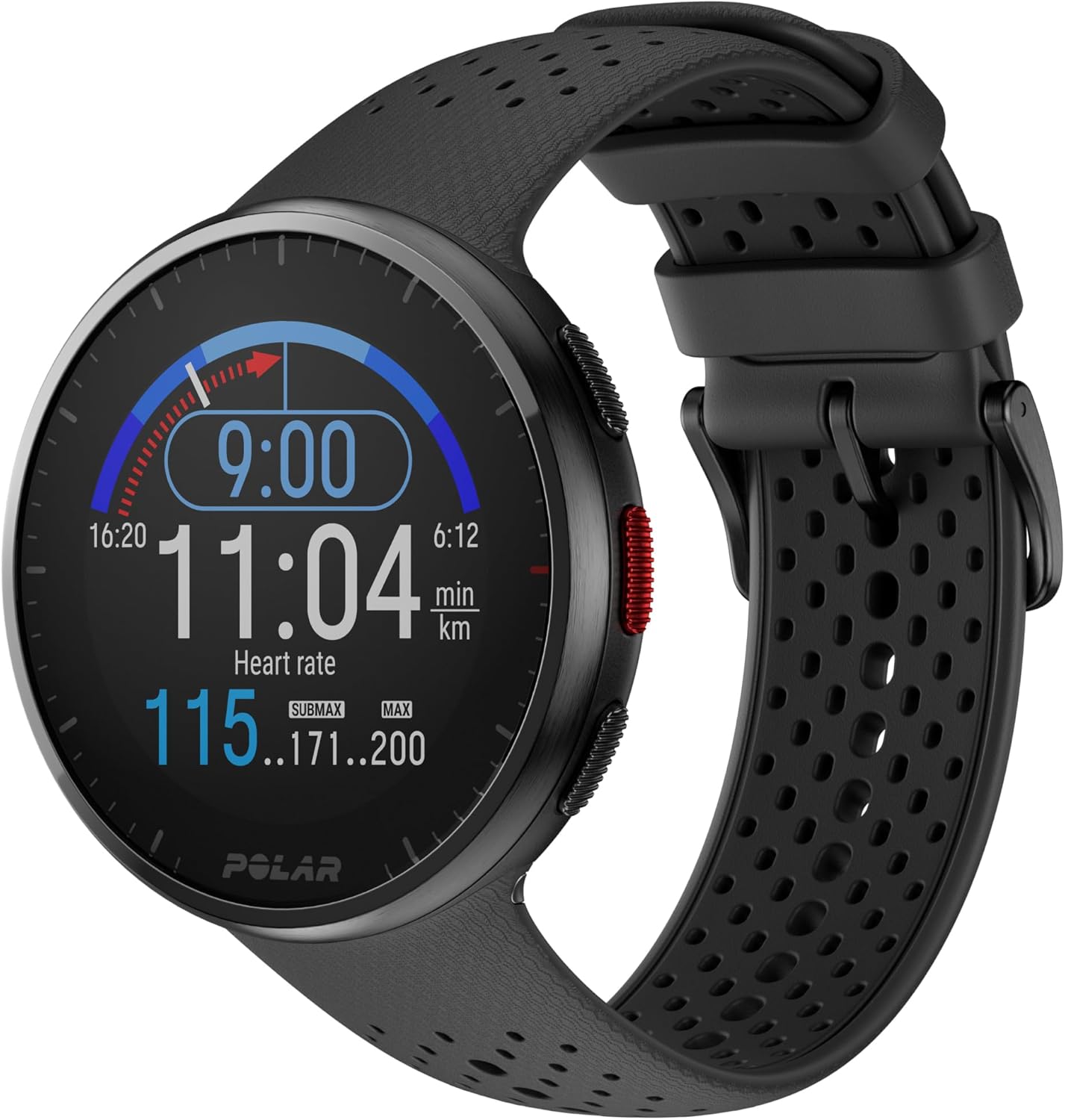
Polar pioneered heart rate training, and the Pacer Pro continues that legacy with exceptional HR accuracy and training guidance.
Why runners love it:
- Industry-leading heart rate accuracy
- Running power from the wrist (no extra sensor needed)
- Training Load Pro with cardio, muscle, and perceived load
- FuelWise nutrition reminders during long runs
- Hill Splitter automatic uphill/downhill detection
Best for: Runners who prioritize heart rate-based training and detailed recovery insights.
Check Price on Amazon →Best Entry-Level: Garmin Forerunner 55

Starting your running journey? The Forerunner 55 gives you everything you need without overwhelming complexity.
Why runners love it:
- Simple, clean interface — perfect for beginners
- Daily suggested workouts
- PacePro pacing guidance
- Recovery time advisor
- Affordable entry into the Garmin ecosystem
Best for: New runners and those who want reliable basics without extra features.
Check Price on Amazon →Garmin vs Coros vs Polar: Which Brand?
Garmin
- Pros: Proven reliability, huge ecosystem, best software
- Cons: Higher prices, some features require premium subscription
- Best for: Runners who want the most refined experience and don't mind paying for it
Coros
- Pros: Excellent value, amazing battery life, lightweight designs
- Cons: Smaller user community, fewer third-party integrations
- Best for: Budget-conscious runners and ultramarathoners who need extreme battery
Polar
- Pros: Best heart rate accuracy, science-based training features
- Cons: Less stylish designs, smaller app ecosystem
- Best for: Data-driven runners who prioritize training science
How to Use Your GPS Watch for Pace Training
Having a GPS watch is just the start. Here's how to maximize it for pace improvement:
1. Set Up Pace Alerts
Configure your watch to vibrate when you go above or below target pace. This keeps you honest during easy runs and prevents starting too fast in races.
2. Use the Lap Button
Press lap at every kilometer or mile to see your split times. This is crucial for interval training and race pacing.
3. Track Your Progress
Review your runs weekly. Look for trends in your average pace at similar heart rates — that's your aerobic fitness improving.
4. Combine with a Pace Calculator
Use the Running Pace Calculator to set target paces for different workouts, then program those paces into your watch.
Frequently Asked Questions
Do I really need a GPS watch? You can run without one — but tracking pace makes training more effective. Even a basic model provides valuable data for improvement.
How accurate are GPS watches for pace? Modern multi-band GPS is very accurate (within 1-2%). Single-band GPS can drift slightly in urban areas or heavy tree cover.
Should I get cellular or music features? Only if you run without your phone and want to stream music or make emergency calls. Most runners do fine without these.
How long do GPS watches last? Expect 3-5 years before battery degradation becomes noticeable. Software updates keep them current.
Final Thoughts
The best GPS watch is the one you'll actually use. Consider your budget, training needs, and which features matter most to you.
- Best overall: Garmin Forerunner 265
- Best budget: Coros Pace 4
- Best premium: Garmin Forerunner 970
- Best for HR training: Polar Pacer Pro
- Best entry-level: Garmin Forerunner 55
Once you have your watch, use our Pace Calculator to set your target paces and start training smarter.
Happy running!
Disclosure: As an Amazon Associate, RunningPace.io earns from qualifying purchases. This doesn't affect our recommendations — we only suggest products we believe in.